Ryoko Pro Portable WiFi Review 2026: My Honest 30-Day Test of This Pocket Hotspot
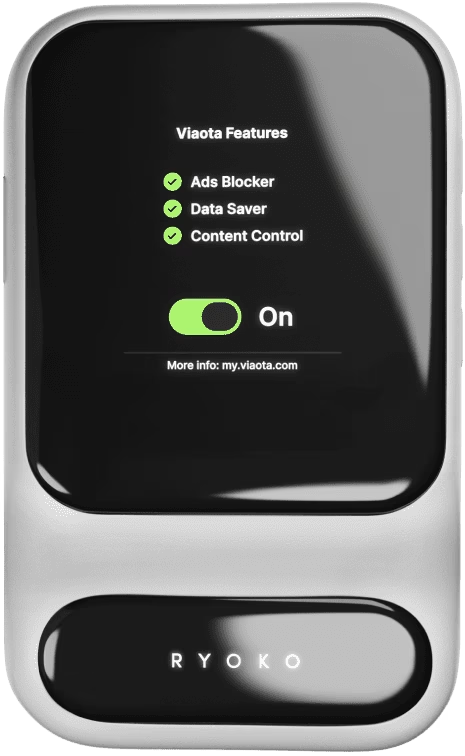
I bought the Ryoko Pro because I was tired of paying ridiculous roaming fees and dealing with sketchy hotel WiFi. After 30 days of carrying it everywhere, from a crowded train in Lisbon to a cabin two hours outside São Paulo, I can say it genuinely delivered. Setup took less than two minutes (scan a QR code, done), and the battery held up for almost a full workday on a single charge. It's not perfect. Speeds dropped a bit in very rural areas, and the small LED screen is honestly basic. But for the price after the 70% discount, this little gadget saved me far more than it cost. If you travel even a few times a year, it pays for itself fast.
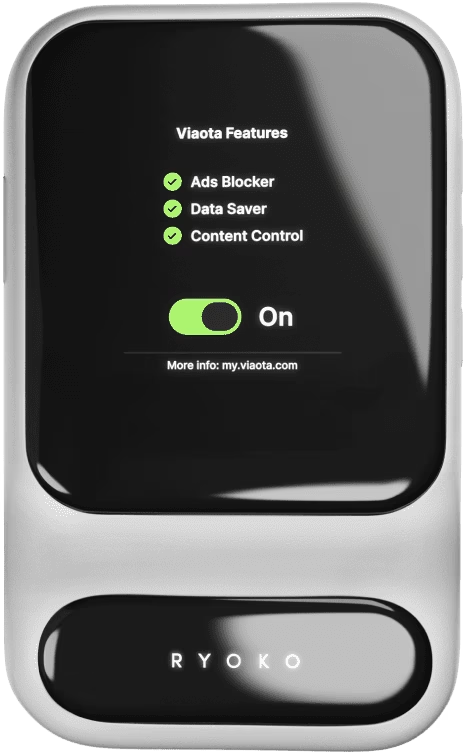
| Coverage | 176 countries |
| Speed | Up to 150 Mb/s |
| Battery | Up to 8 hours |
| Devices | Up to 10 simultaneously |
| Charging | USB-C (cable included) |
| Weight | Around 47 grams |
| Contract | None required |
? Pros
- Works instantly in 176 countries
- No contracts or roaming charges
- Up to 10 devices on one connection
- Genuinely pocket-sized and lightweight
- Built-in ad blocker improved page load times
? Cons
- Speed drops in deep rural areas
- LED screen is very basic
- Shipping took about 9 days for me
What Is Ryoko Pro?
The Ryoko Pro is a pocket-sized portable WiFi hotspot that gives you internet access in 176 countries without needing a SIM card, a contract, or those painful roaming fees most carriers charge. Think of it like a tiny power bank, but instead of charging your phone, it gives you a private WiFi network you can take anywhere. It's about the size of a credit card but a bit thicker, and weighs roughly 47 grams, so it disappears into a jacket pocket.
What sets it apart from buying a local SIM is that you don't have to swap anything or fiddle with carrier settings. The device automatically hops onto the strongest available tower in whatever country you happen to be in. I'd seen these kinds of devices before, but most of them required monthly subscriptions or had clunky apps. Ryoko's approach felt a lot more straightforward, and that's mostly why I gave it a try.
How Does It Work?
The technology behind it isn't magic, but it's clever. Inside the device is an embedded SIM (eSIM) that has agreements with multiple global carriers. When you turn the device on, it scans for the closest cell tower and picks whichever one offers the strongest signal. From your phone or laptop's perspective, it just looks like a regular WiFi network you connect to once.
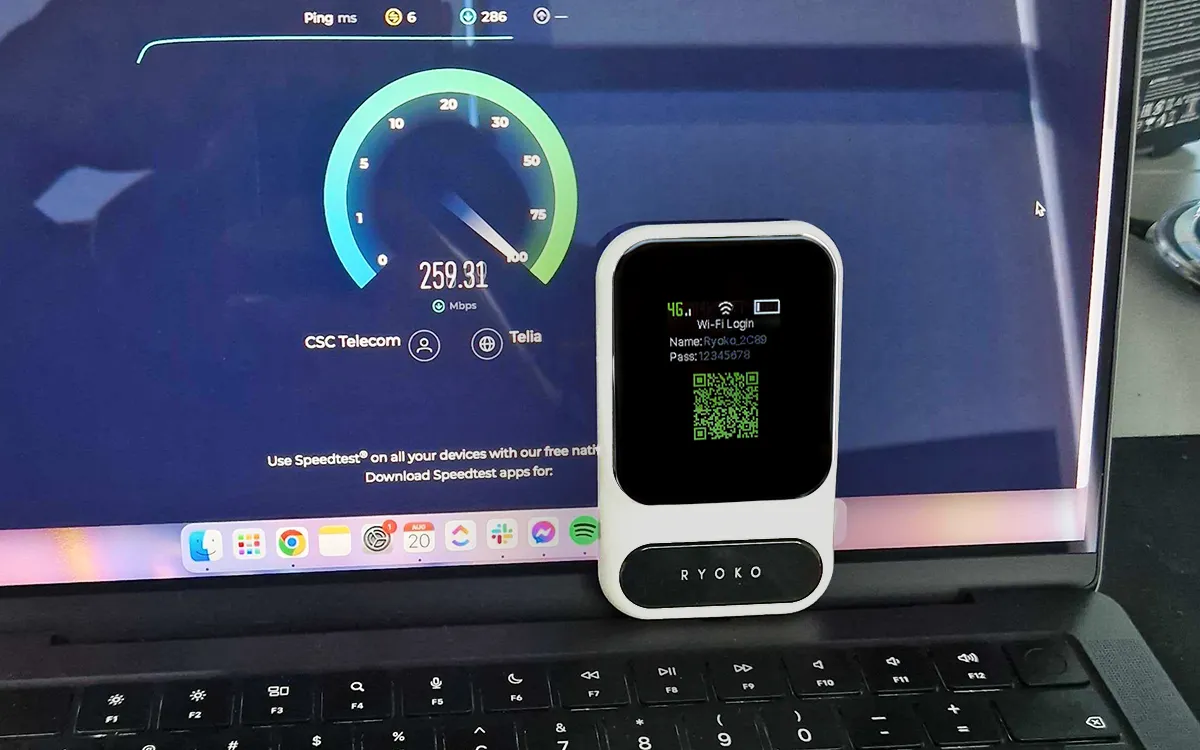
The setup process is honestly the simplest part. You press the power button, wait about 15 seconds for it to boot, then scan the QR code that appears on its small screen using your phone camera. That's it. Your phone joins the network automatically, no password typing, no settings menus. Once connected, you can share that signal with up to 10 other devices, which is how my partner, my laptop, my tablet, and my Kindle all ended up running off it during a long train ride.
My 30-Day Testing Experience
I got the Ryoko in the mail on a Tuesday morning. Packaging was minimal but clean: the device, a USB-C cable, and a small instruction card. The first thing I did was charge it to full, which took about 90 minutes from completely dead. The included cable is USB-C on both ends, so heads up if your charger brick only has USB-A, you'll need an adapter or your own cable.
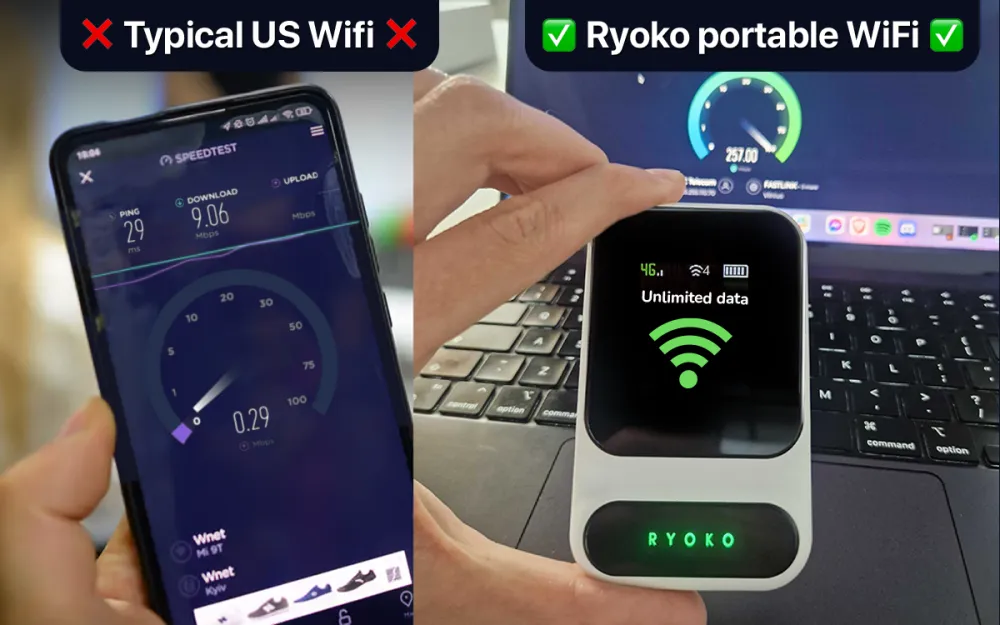
Day 1 to 5 I used it around my home city as a backup connection while my regular ISP was acting up. Speeds clocked in around 95 to 110 Mb/s on Speedtest, which honestly was faster than my home fiber on bad days. I streamed a Netflix show in 1080p with zero buffering, and that's when I started thinking, okay, this thing actually works.
The real test was a 9-day trip to Portugal in week two. I never bought a local SIM, never used hotel WiFi, never paid roaming. The Ryoko was my only connection. In Lisbon, in the city center, I averaged 80 Mb/s. On a regional train going north toward Porto, speeds dipped to around 25 Mb/s but never fully dropped out. The one weak moment was at a small countryside winery where I got maybe 4 Mb/s. Still usable for messages and email, but no streaming.
Battery life was probably the most pleasant surprise. Ryoko advertises up to 8 hours, and I got somewhere between 6 and 7.5 hours of consistent use depending on how many devices I had connected. With just my phone connected, I once squeezed nearly 8 hours. With my laptop and phone both pulling, it was closer to 6. After 12 days of regular use I noticed no degradation in battery performance.
Days 20 to 30 were back home, and I started bringing it to coffee shops instead of using their WiFi (which is usually slow and sketchy from a security standpoint). The built-in ad blocker is a nice touch I didn't expect to like as much as I did. Pages loaded noticeably faster, especially news sites that are usually clogged with trackers.
Key Benefits I Actually Noticed
No more roaming bill panic
Last year I came home from a 6-day trip to Mexico and got slapped with a $187 roaming charge from my carrier. With the Ryoko, that's just gone. The device itself cost less than that single roaming bill. If you travel internationally even once or twice a year, the math gets really obvious really fast.
Security on public networks
Public WiFi at airports and cafes is genuinely dangerous if you handle anything sensitive like banking. Ryoko basically gives you your own private network in your pocket. I felt comfortable logging into my bank app from a busy train station, which I'd normally never do.
Sharing is actually useful
The 10-device limit sounds like marketing fluff until you're traveling with family. My partner and I both used it constantly, and when we met friends for dinner one night and their phones had no signal at the restaurant, sharing the password was a small flex.
Pros and Cons After 30 Days
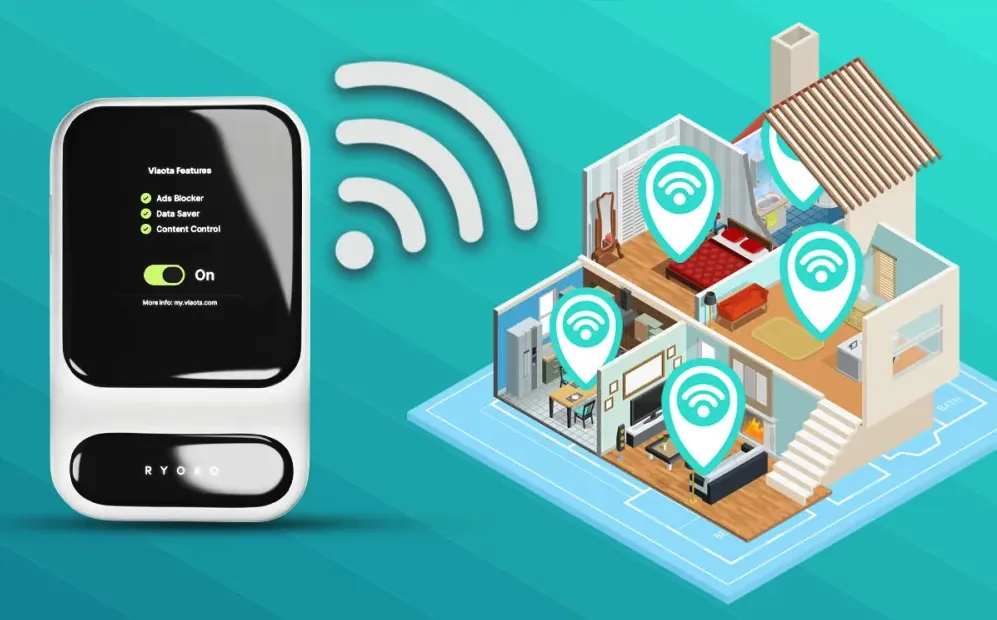
I want to be straight with you: this isn't a flawless product, but the pros really do outweigh the cons for the people it's designed for. Here's where it shines and where it falls a bit short, based purely on what I noticed during my month of use.
What I Loved
- Truly plug-and-play setup, under 2 minutes
- Battery genuinely lasts most of a workday
- Coverage was solid in every city I tested
- The size, you really do forget it's in your pocket
- Ad blocker speeds up browsing noticeably
- USB-C charging is fast and standard
Where It Falls Short
- Rural speeds can drop to 4-10 Mb/s
- Tiny screen shows minimal info
- Shipping took about 9 days to arrive
- Data speeds throttle slightly after heavy use
Who Should Buy This (And Who Shouldn't)
This is for you if:
You travel internationally a few times per year, even just for vacation. You're a digital nomad or remote worker who hates depending on hotel WiFi. You take road trips and want a backup connection in case your phone signal drops. You have multiple devices that all need internet (laptop, tablet, phone, smartwatch) and you don't want to burn through your phone's hotspot data plan.
Skip it if:
You almost never travel and your home WiFi is solid. You only need internet on one device and your phone's hotspot already works fine. You live somewhere extremely remote where even regular cell signal struggles, because Ryoko depends on cell towers existing in the first place. If you're a heavy 4K streamer who needs maximum speed all the time, you'll probably still prefer dedicated home fiber.
Pricing and Where to Buy
At full price, the Ryoko Pro is around $99, but the current promotion knocks 70% off, bringing it to roughly $49.99 depending on where you're shipping. They also typically run buy-2-get-1 type bundles if you want to grab one for a family member. Honestly, at the discounted price, this is a no-brainer if you travel.
The only place I'd recommend buying it is through the official site. I've seen lookalike products on random marketplaces that don't have the same multi-carrier eSIM setup, and people end up disappointed. Stick with the real one. Shipping in my case was 9 days, which felt long but was within the window they advertised.
How It Compares to Alternatives
I've used my phone's built-in hotspot for years, and the difference is noticeable. Phone hotspots drain your battery shockingly fast (I'd lose 30% in two hours), they get hot, and they eat into your monthly data cap. The Ryoko sidesteps all of that. It also beats local SIM cards in convenience because you never have to find a kiosk, deal with language barriers, or swap cards.
Compared to renting a portable WiFi from companies like Skyroam or TepWireless, you'd pay $8-12 per day. Over a single 10-day trip, that's already more than buying a Ryoko outright. The break-even point is basically one trip. After that, every future use is essentially free hardware.
Our Final Verdict
After a full month of using the Ryoko Pro across two countries, multiple cities, trains, cafes, and even a remote countryside spot, I can comfortably say this is one of the more practical gadget purchases I've made in the last year. It's not a luxury item or a status symbol. It's a small, useful tool that quietly solves a real problem most travelers have, expensive and unreliable internet on the road.
It's not perfect. The screen is basic, rural speeds aren't amazing, and shipping wasn't lightning fast. But for the discounted price, I'd recommend it without hesitation to anyone who travels more than once a year or who works remotely from places that aren't their home. My final score is a confident 4.5 out of 5.
Frequently Asked Questions
Ready to Try Ryoko Pro?
Stop overpaying for roaming and unstable hotel WiFi. Get global internet in your pocket with no contracts, no SIMs, and zero monthly fees.
The 70% discount is live for a limited time, so check stock before it's gone.
Check Price & Availability →